Land and lot evaluation for a barndominium in North Alabama
Most failed barndominium projects in this region fail on the lot. The service that prevents it is the evaluation: the soil test and septic permit through the county health department, the flood determination, the access and utility answers, the rock and grade, the recorded covenants and the jurisdiction, in that order, before a plan is bought or a loan is applied for. A licensed builder can run or coordinate most of it, and the pieces that are yours alone, the septic application and the deed, are the ones this page is clearest about.
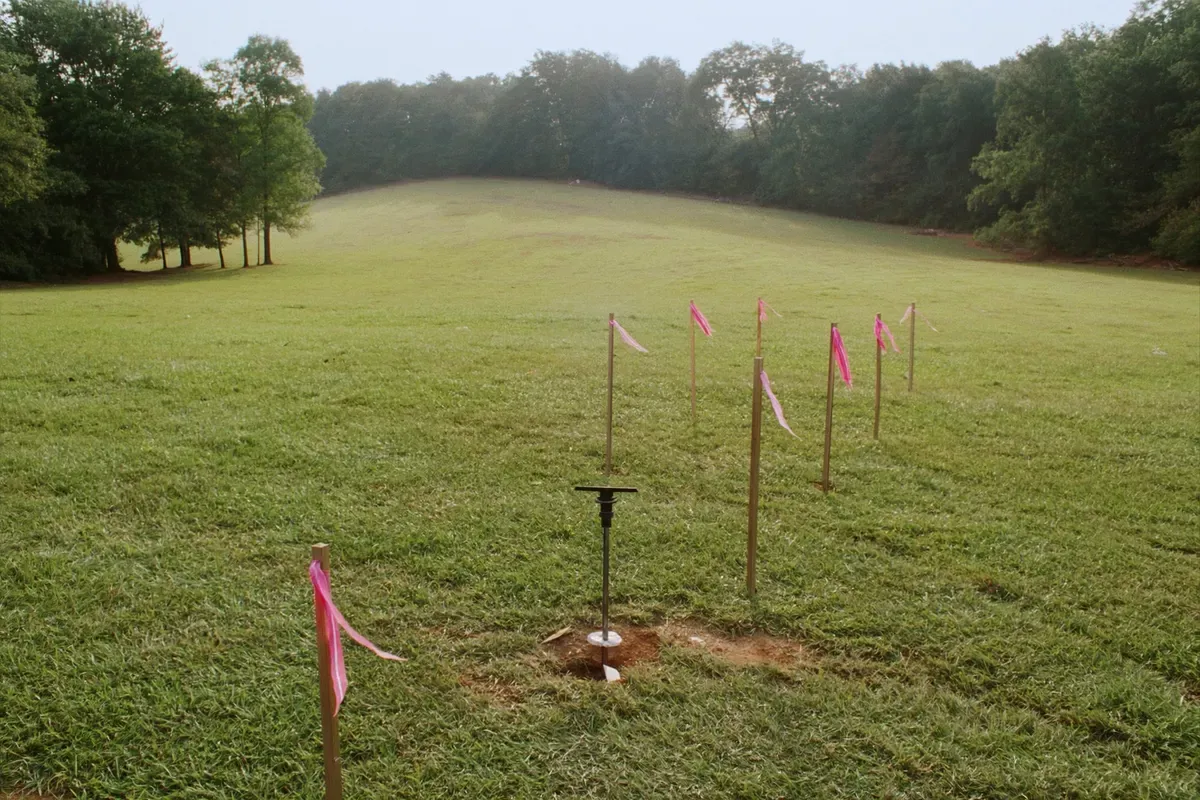
What does a lot evaluation cover?
Seven checks, four of them free:
Jurisdiction: is the lot inside a city or a city's planning jurisdiction, where the city's code applies regardless of the county.
Covenants: recorded restrictions on the plat or the deed that forbid metal buildings, set minimum sizes or setbacks, or require a house before an outbuilding.
Floodplain: the FEMA map for the parcel, and the county flood damage prevention ordinance where any of it is in a mapped zone.
Access: legal, buildable access to a public road, and the county driveway or pipe permit for a new entrance.
Soil and septic: the professional soil evaluation and the county health department permit, which decide whether the lot can carry a house and where.
Utilities: distance to power, a water tap or a well, and what each costs before the builder can start.
Rock and grade: what is under the topsoil and how much dirt it takes to make a pad.
Why does the septic evaluation come first among the paid checks?
Because it can end the project. The county health department permits an onsite sewage system only after a soil evaluation by a professional engineer, land surveyor, geologist or soil classifier, and a lot whose soil fails has no system, no permit and no house without an engineered alternative or a different building site. On the limestone valley floor and the sandstone plateaus that make up this footprint, failure is common enough that buying land without the evaluation, or a purchase contingency on it, is the single most expensive mistake people make here. The septic guide covers the process.
Source: Alabama Department of Public Health, Soil and Onsite Sewage: Can I Live On This Lot?, read 2026-09-05.
What does the county permit status add to the evaluation?
The schedule and the contract. In Madison County the lot goes through plan review and the house through inspections, so the evaluation feeds a permit application. In the counties that state or show no county building permit, the evaluation is the county's entire involvement apart from the floodplain and driveway permits, and the results feed the contract instead: the code edition, the inspection schedule, and the septic permit in your name. Each county page carries the status and the phone number.
Source: Code of Alabama section 34-14A-12, as published by the Home Builders Licensure Board, read 2026-09-05.
What do rock and grade actually cost?
Whatever the excavator finds. A level lot with deep soil is a pad and a slab. A sloped ridge lot in Blount or St. Clair is dirt work before anything else. A plateau lot on Sand Mountain with sandstone a foot down is either a slab set to the rock or a rock excavation, and the septic system is designed around the same rock. A builder who has dug in your county knows, and an estimate that carries a rock allowance is more honest than one that does not mention it.
What do the utilities cost, and who pays?
You do, to the utility, before the builder can run a temporary service. Power extension is priced by the electric cooperative or utility by distance and equipment; water is a rural water system tap where the line runs by, or a well where it does not. Both are quotes you can get before you buy the lot, in writing, and both belong in the site budget beside the septic system and the driveway.
Who runs the evaluation?
The soil evaluation is done by one of the professionals the state names, and the septic application is yours to file with the county health department. The flood determination is a map lookup you or a lender can do. The utility quotes come from the utilities. A licensed builder coordinates the rest and reads the results into a site plan and an estimate. What the builder cannot do is sign the septic application or the deed for you, which is why this page keeps saying those two are yours.
When is the lot ready for a builder?
When the folder holds the jurisdiction answer, the covenant read, the flood map, the access and driveway answer, the soil evaluation or septic permit, and the utility quotes. That folder turns the first builder conversation from "can there be a house here" into "what house." When it exists, send your county and your plan and it goes to a licensed local builder who works this footprint. The lot guide is the checklist version of this page.
Questions people ask
- What is a lot evaluation for a barndominium?
- The checks that decide whether a lot can carry a house and what it costs to build there: jurisdiction, covenants, floodplain, access, the soil evaluation and septic permit, utilities, and rock and grade.
- Should I evaluate the lot before buying it?
- Yes. At minimum the free checks and the soil evaluation, or a purchase contingency on the lot passing the septic evaluation.
- Who does the soil test for a septic permit in Alabama?
- A professional engineer, professional land surveyor, professional geologist or professional soil classifier, and in some counties the county health department environmentalist. The county health department then issues the permit.
- Does the county evaluate the lot?
- The county health department evaluates it for septic. The county building department evaluates it for a permit only in Madison County among the 12; the others list no building department, and the floodplain and driveway permits are handled by the county engineer or road department.
Talk to a builder about land and lot evaluation
Your county and what you want to build. No email needed.